
I couldn’t “mindset” my way out of biology
Is it a millennial trait that we think we can do any job?
Maybe it’s that we are really adaptable or have spent our lives pivoting.
Or is it that we’re overconfident—maybe even a little cocky about our skills?
There’s probably some of all three for me. I’ve always seen most tasks and jobs as something I just haven’t figured out how to do yet… except for first responder work.
I’m sure I could learn the skills; I love me some learning. I’m maybe 30% confident I could handle the departmental politics and station drama. Ugh. I have an extensive toolbox of support, so I’m assuming the emotional trauma would be addressed, though still impactful. I’m really sharp and efficient in short-term crisis and chaos.
But where the job throws me is the requirement to override basic human needs.
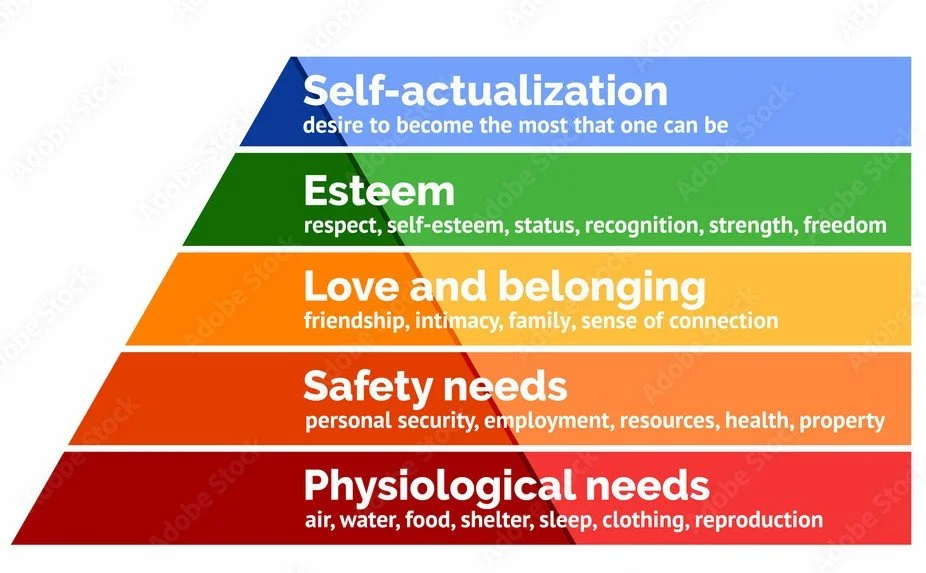
Physiological: Food, water, elimination, and sleep.
Safety: Nearly every element is a safety hazard.
You’re telling me I have to be jolted awake in the middle of the night and go help someone without going to the bathroom and getting a snack first? WTF…
Side note: This quasi happened in our house. We got a late-night call to go next door to help my grandmother-in-law who fell. My firefighter husband was dressed and out the front door in about 60 seconds. I, instinctually and definitely without thinking, went to the bathroom first because that’s what I do when I wake up. Then I had to find my shoes. Pretty sure the engine would have left without me.
I thought I knew my limits, but motherhood pushed me off a cliff.
Postpartum exhaustion didn’t just make me tired; it made me a stranger to myself. I hit a point where I felt like I didn’t even want to take care of my baby—a thought that felt like a foreign object in my brain because I knew it wasn't true, yet there it was. I was drowning in this toxic anger that I was the only one who could do everything right, while simultaneously being too drained to function.
It turns out, you can’t "mindset" your way out of a brain that has been chemically and physically stripped of its foundation.
My experience with that hormonal and neurological chaos was a season (that I’m still working my way out of); for first responders, it’s the job description. I realize that while I’m adaptable, I’m not built to override the very biological foundations that keep my mind steady. To those of you who operate in that "betrayal zone" every shift—ignoring your own hunger, exhaustion, and safety to prioritize ours—I don’t say "I couldn't do what you do" to be nice. I say it because I understand the clinical cost of the job.
When I first stepped into the world of first responder life, I was flying blind. I didn't have the tools, the science, or the resources to understand why our "normal" looked so different from everyone else's. I didn't understand that when my husband was overriding his own biological needs at work, it was inevitably going to ripple into our living room.
I’m very curious about the intersection of high performance and biological reality—not just for the person wearing the uniform, but for the family standing behind them.
Look at Maslow’s Hierarchy of Needs (pictured above). The entire pyramid is built on Physiological needs and Safety. When a first responder’s job requires them to dismantle those bottom two layers every tour, the family often ends up trying to compensate for that instability. If we don’t give families the resources to build their own steady foundation, everyone loses.
We like to pretend first responders are machines, but they are part of a very human ecosystem. At Phoenix 26, I’m focused on that ecosystem. Because when the family is equipped, the first responder is supported—and that's how we keep the fire from going out.